 |
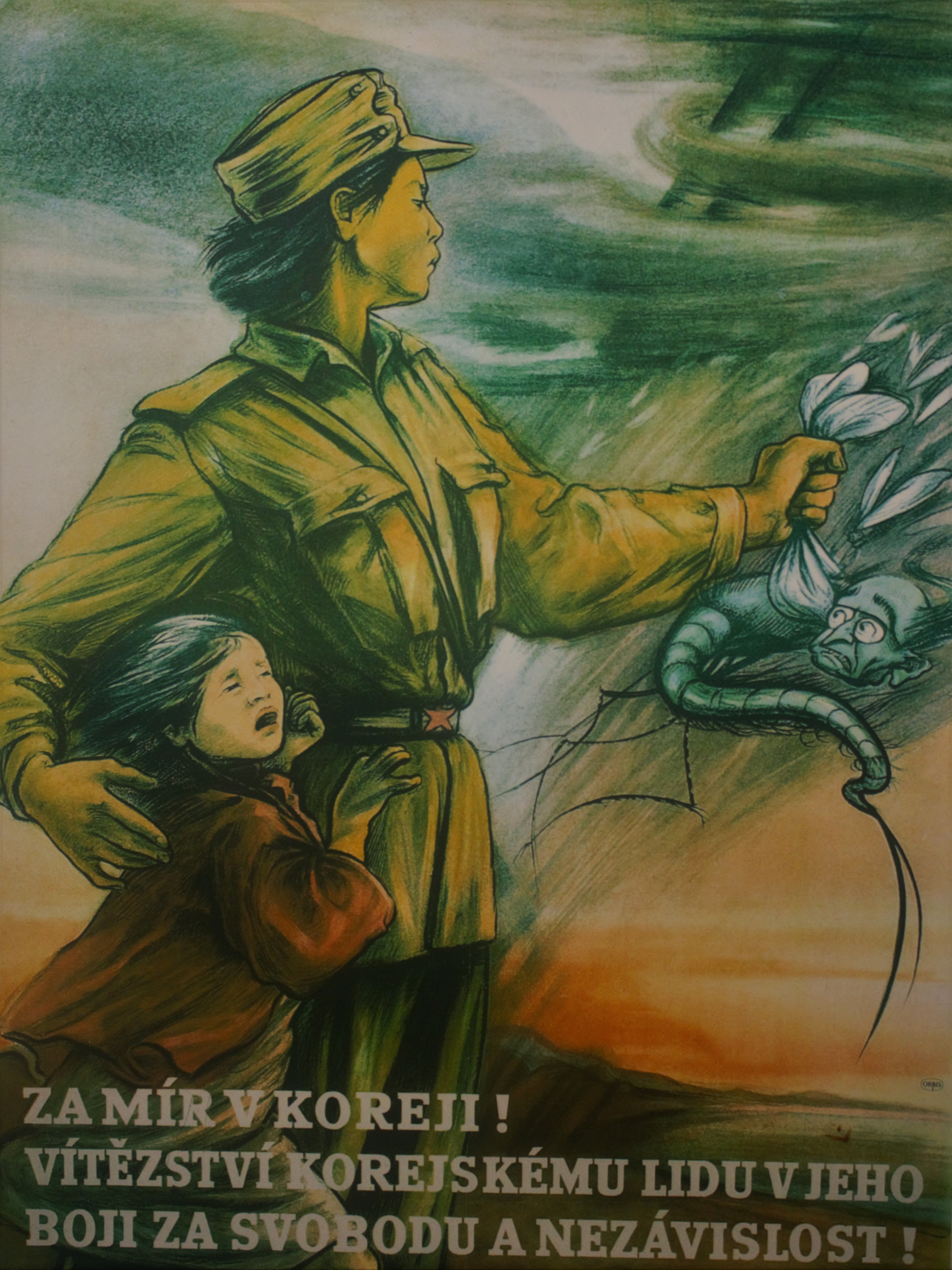
#CommunistMuseumPragueCzechRepublic Here i am inside the Communist Museum located in Prague (established in 2001) showing the hard life lived in Czechoslovakia behind the Iron Curtain with the failed Soviet Union ideology Berlin Wall Probably the most "powerful" symbolism of the Communist Rule was the building of that Wall of Shame, which was the name used by Westerners (a section of that barrier is here on display at the museum) It was built in 1961 to separate East and West Berlin with the intent to prevent mass emigration of skilled workers plus its professionals to the freedoms outside this barrier This was a powerful sign of the division between the Communist East and the Democratic West during the Cold War |
 |
Theories of Communism It was basically a classless society with the government owing 100% of major properties, industries, running all economic activity and controlling mass media It is done as a single party system that suppresses any opposition Diminishing Power This way of governing was widely influential during the 20th century but declined with the Soviet Union breakup in 1991 Modern Times In todays world China. Cuba, Laos and North Korea are considered communist states but have incorporated more economic freedoms while maintaining a one-party rule But it still rejects private ownership and free markets for its citizens, plus it still plays a dominant role in managing the economy and the education system |
 |
Marshall Plan In 1948 the Czech Government attempted to join under the US sponsorship with its aid during the post war rebuilding. The plan was to help in economic and political recovery of all Western Europe after the World War to prevent the spread of Communism Installed a Government But the Soviet Union stopped this in Czechoslovakia (for the next 40 years) by installing a puppet regime to run the country and stunt its growth |
 |
| Spies Everywhere During the communist era, Czechoslovakia was a hub of espionage which was run by the State Security (StB) that would crush any dissent among its citizens towards the government It worked in collaboration with the Soviet Union and its own KGB which had its own operations within the country |
 |
| Female Power The women of Czechoslovakia resisted communism through various means including organizing underground communities, political opposition and street protests Repercussions They faced significant danger, which included psychological and physical threats plus the risk of losing their children |
 |
| Severe Recession But then in the 1960s with changes of leadership in Prague, this led to a series of softer rules within the communist circles Not because of a gentler stance, but of economic stagnation So with the loosening of reforms the citizens got a "taste" of freedom and wanted more Warsaw Pact This liberalization led to a violent uprising, but it was crushed with the invasion in 1968 of 200,000 troops from the Soviet Union and their satellite countries of Poland, Hungary and Bulgaria that entered the country This unfortunately rolled back (again) the hard-line communist regime and its ways |
 |
| Invasion of Czechoslovakia The citizens offered little resistance with a few blocked roads, changed the street signs and so on, but this was a very small stop gap The International Reaction It was mixed with mostly verbally condemnation plus the United States was involved in the Vietnam War at this time, so was occupied with their own drama |
 |
| Stayed Strong The invasion resulted in the deaths of 137 Czechs and Slovaks plus hundreds of injuries, but their will would not be broken and kept moving forward for freedom |
 |
Brezhnev Doctrine So after the invasion the Soviet Union justified it with their new namesake policy, with the reasoning of the right to intervene in any socialist country where Communist rule was seen as being threatened Did Not Return The borders were then sealed in 1969 with many Czechs and Slovaks (that were abroad at the time during the invasion) who just decided to stay away |
 |
The Peoples Militias It served as an instrument of power for the Communist Regime by mostly guarding buildings and controlling riots Trust No One At its height it had 85,000 (boots on the ground) volunteers with membership reaching 120,000 people Initially equipped with rifles and submachine guns it evolved into heavier weapons like anti-aircraft guns, mortars plus RPG-7s |
 |
The Velvet Revolution Finally in 1989 with a series of peaceful demonstrations and strikes against the communist government, it led to the collapse of the regime plus the resignation of the leadership Vaclav Havel He became President of Czechoslovakia in December 29th 1989 which finally ended 41 years of repression of one part rule |
 |
Still Doubts With the new freedoms came old suspicions, as many felt that the promise of equality after communism was not delivered Citing corruption and a sense that a new elite was created by using connections from the old regime New Belief Despite the disillusionment, there was a hope for a democratic society where people could work together for the common good |
 |
| The Recovery It started with no more shortages, or the rationing of goods and finally by repairing of the machinery by any means because of the restrictions from before Rebirth of a Country Czechoslovakia embarked on a rapid liberalization of its financial markets, a program of mass privatization and the establishment of a universal banking system This period also saw the return of property to the previous owners, plus the privatization of small units through auctions for everyone New Problems But the newfound freedom allowed the long standing tensions between Czechs and Slovaks to resurface But doing it the proper way like two grown adults they negotiated a peaceful divorce and in January 1st 1993 both were independent countries |
 |
| Today as One From those "dark times" of repression the Czech Republic, Poland and Hungary joined NATO in 1999 (Slovakia became a member in 2004) to ensure its external security to transform its military to align with western countries who are also part of this exclusive group |
.jpg) |
Power of Sports & Heroes During those times it gave the citizens hope that anything is possible A) Jiri Daler; won a Gold Medal at the 1964 Tokyo Olympics and set two world records in 1967 B) Emil Zatopek; nicknamed the Czech Locomotive he was a legendary long distance runner and widely considered one of the greatest athletes of the 20th century C) Bedrich Supcik; was the first ever Olympic Champion for Czechoslovakia as a gymnast D) Josef Masopust; won the prestigious Ballon d Or in 1962 and is regarded as one of the greatest midfielders of football E) Dominik Hasek; he is the only goaltender in NHL history to win consecutive Hart Memorial Trophies as the league MVP |